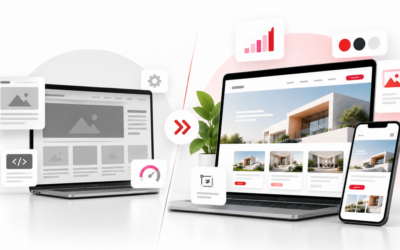


How Much Does a Business Website Cost in 2026?
One of the most common questions business owners ask before starting a website project is surprisingly simple: “How much will it cost?” While the question itself is straightforward, the answer is anything but. In fact, if you ask five different agencies for a quote on a business website, there is a good chance you will receive five completely different numbers. Some may quote ₹20,000. Others may suggest ₹1,50,000. A few may even recommend budgets that run into several lakhs. Naturally, this leaves many business owners confused. How can the same requirement produce such different prices?
The confusion usually stems from the assumption that all websites are essentially the same. On the surface, that assumption seems reasonable. Most websites have a homepage, an about section, service pages, contact forms, and perhaps a gallery or blog. To a business owner who is not involved in web development, it can appear as though every provider is offering the same product with different price tags attached. However, the reality is far more complex.
A website in 2026 is no longer just a collection of pages published online. It is often the first interaction a customer has with a business. It is where potential buyers evaluate credibility, compare options, and decide whether a company appears trustworthy enough to contact. For some organizations, the website functions as a lead-generation engine. For others, it acts as an online store, a customer support hub, or even an operational platform connected to multiple business systems. This is why website pricing varies so dramatically. The real question is not “How much does a website cost?” but rather “What kind of website does your business actually need?”
Understanding this distinction is essential because many businesses either overspend on functionality they will never use or underinvest in a website that eventually limits their growth. The goal is not to find the cheapest website available. The goal is to build a website that aligns with business objectives and delivers measurable value over time.
A Story That Explains the Problem Perfectly
Consider two business owners operating in completely different situations.
The first owns a local accounting firm. Most of his clients come through referrals and word-of-mouth recommendations. His primary objective is to establish trust and legitimacy online. When a potential client hears about his services, they will likely search for the business on Google, visit the website, review the services offered, and decide whether to get in touch. For him, the website serves as a credibility tool.
The second business owner runs a rapidly growing company investing heavily in digital marketing. Every month, thousands of visitors arrive through search engines, paid advertisements, social media campaigns, and email marketing efforts. Her website is not simply there to provide information. It is responsible for converting visitors into leads, generating inquiries, tracking user behavior, integrating with marketing tools, and supporting customer acquisition efforts.
Although both businesses need websites, the role those websites play is entirely different. Consequently, the level of planning, customization, functionality, and optimization required is also different. Yet many businesses compare website quotes without first considering this fundamental distinction. They assume every website should cost roughly the same because they focus on what is visible rather than what the website is expected to accomplish.
This is perhaps the biggest reason website pricing continues to confuse business owners. They are often comparing two completely different solutions while assuming they are the same product.
Why Website Pricing Varies So Much
To understand website costs, it helps to think about another industry where pricing can vary significantly. Imagine asking, “How much does it cost to build a building?” The answer could range from a few lakhs for a small structure to several crores for a commercial facility. The reason is obvious: every project has different requirements, levels of complexity, and intended outcomes.
Websites operate in exactly the same way. A small local business that relies primarily on referrals may only require a simple website that provides information about services, contact details, and company background. The primary goal is credibility. Visitors arrive, confirm the business is legitimate, and make contact. The website supports the business, but it is not the primary growth driver.
Now compare that with a company investing heavily in digital marketing. This business may be spending thousands of rupees every day on advertising campaigns, SEO, and social media marketing. For them, the website is not merely informational. Every page is designed to guide visitors toward a specific action, whether that is submitting an inquiry, booking a consultation, or making a purchase. User experience, page speed, conversion optimization, analytics, and performance all become critical considerations.
Although both businesses need websites, the value they expect from those websites is completely different. As a result, the level of planning, design, development, testing, and optimization required is also different. This is one of the primary reasons website prices vary so widely across the market.
Business Website Cost Ranges in 2026
While every project is unique, most business websites in India generally fall into several broad pricing categories.
A basic business website typically ranges from ₹15,000 to ₹75,000. These websites are often suitable for freelancers, consultants, startups, local service providers, and businesses that simply need a professional online presence. The scope usually includes essential pages, mobile responsiveness, contact forms, and basic search engine optimization. For businesses that are not relying heavily on digital lead generation, this level of investment can be sufficient.
The next category is the professional business website, which generally ranges from ₹75,000 to ₹3,00,000. This is where many growing businesses should focus their attention. At this level, the emphasis shifts from simply having a website to building a digital asset that actively supports business growth. Custom design, improved user experience, stronger branding, conversion-focused layouts, advanced SEO foundations, and better performance optimization are typically included. Businesses investing in digital marketing often see the greatest return from websites in this category because the website becomes an active participant in customer acquisition.
E-commerce websites represent another category altogether. Depending on requirements, online stores typically start around ₹80,000 and can easily exceed ₹5,00,000. Product management, inventory systems, payment gateways, shipping integrations, customer accounts, security requirements, and order management all contribute to development complexity. The larger the catalog and the more advanced the functionality, the greater the investment required.
Custom business platforms occupy the highest pricing tier. These projects often begin around ₹5,00,000 and can extend into several lakhs or even crores. Unlike traditional websites, these systems are built around specific business processes. Customer portals, booking systems, SaaS products, internal management platforms, and enterprise solutions all fall into this category. Development involves extensive planning, custom programming, integrations, testing, and long-term support, which naturally increases project costs.
What Actually Drives Website Costs?
One of the biggest misconceptions in website development is the belief that design is the primary factor influencing price. While design certainly plays an important role, it is only one component of a much larger process.
Strategy often represents one of the most valuable aspects of a successful website project. Before a single page is designed, experienced agencies spend time understanding the business, its customers, competitors, objectives, and growth plans. These insights influence everything from site structure to content strategy and conversion pathways.
Functionality is another major factor. A website containing static information is relatively straightforward to build. However, as businesses introduce appointment booking systems, customer dashboards, payment gateways, CRM integrations, automation workflows, multilingual capabilities, or advanced search functionality, development complexity increases significantly. Each feature requires additional planning, testing, and ongoing maintenance.
Content also has a substantial impact on overall project value. A beautifully designed website will struggle if the messaging fails to communicate value effectively. Professional content creation requires understanding customer pain points, business positioning, and conversion psychology. This is why content development often becomes one of the most underestimated aspects of website projects.
Performance and security contribute further to costs. Customers expect fast-loading websites, especially on mobile devices. Search engines also prioritize speed and user experience. At the same time, cybersecurity threats continue increasing, making robust security measures more important than ever. These elements may not always be visible to users, but they significantly influence the effectiveness and longevity of a website.
How Agencies Actually Calculate Website Pricing
Many business owners assume agencies simply estimate a number and send a proposal. In reality, professional website pricing is usually based on multiple factors working together.
The first consideration is project scope. The number of pages, content requirements, design complexity, integrations, and functionality all contribute to the estimated workload. A ten-page corporate website naturally requires fewer resources than a fifty-page website containing multiple service categories, landing pages, and custom functionality.
The second consideration is the expertise involved. A project may require designers, developers, SEO specialists, content strategists, project managers, and quality assurance teams. Each professional contributes a different skill set to the final product. As projects become more sophisticated, more expertise becomes necessary.
Time is another major factor. Some websites can be completed within a few weeks, while others may take several months of planning, development, revisions, and testing. The greater the time commitment, the higher the overall investment.
This is why two agencies can arrive at different pricing even when reviewing similar requirements. One may be approaching the project as a simple design task, while another may be approaching it as a strategic business asset intended to support long-term growth.
Common Mistakes Businesses Make When Comparing Quotes
One of the biggest mistakes businesses make is comparing website proposals based solely on price. While budget is important, it should never be the only deciding factor.
A lower-priced proposal may exclude content writing, SEO setup, performance optimization, testing, training, or post-launch support. Another proposal may include all of these services within a higher investment. Without examining the details carefully, businesses often assume both proposals offer the same value.
Another common mistake is focusing heavily on design while overlooking functionality and performance. A visually attractive website may still struggle to generate results if it loads slowly, lacks clear messaging, or creates friction during the customer journey.
Businesses also underestimate scalability. A website that meets today’s requirements may become limiting within twelve months if growth occurs faster than expected. Rebuilding a website later is often far more expensive than planning for growth from the beginning.
The Hidden Costs Businesses Often Overlook
One of the biggest mistakes businesses make is focusing exclusively on development costs while ignoring the expenses associated with operating a website over time. A website is not a one-time purchase. It is a long-term digital asset that requires ongoing investment to remain effective.
Hosting is one such expense. While budget hosting plans exist, businesses that depend on their websites for lead generation or customer engagement often benefit from higher-quality hosting environments that provide better speed, reliability, and security. The annual cost may range from a few thousand rupees to significantly more depending on requirements.
Domain names also require annual renewal. Although the cost is relatively small compared to development, premium domain names can command much higher prices. Maintenance is another area frequently overlooked. Software updates, backups, security monitoring, bug fixes, and technical support all contribute to keeping a website healthy and secure. Ignoring maintenance may save money in the short term but often results in larger costs later when issues arise.
Finally, businesses should consider ongoing investments in SEO, content creation, and digital marketing. A website without visitors is unlikely to generate meaningful business results. For many organizations, attracting and converting traffic becomes just as important as building the website itself.
Why the Cheapest Website Is Not Always the Most Affordable
It is natural for businesses to compare quotes and seek the best value. However, focusing solely on the lowest price can create unexpected problems.
Imagine two companies launching new websites. The first chooses the cheapest option available. The second invests more in a professionally planned and developed solution. Initially, the first company feels confident because it spent less money. However, six months later, issues begin emerging. The website loads slowly, performs poorly on mobile devices, struggles to rank in search engines, and fails to convert visitors into inquiries.
As a result, the company either loses opportunities or eventually pays for a complete rebuild. Meanwhile, the second company continues benefiting from a website designed to support growth, improve customer experience, and generate leads consistently. Over several years, the additional revenue generated by the stronger website may exceed the original investment many times over.
The lesson here is not that businesses should always choose the most expensive option. Rather, they should evaluate value instead of focusing solely on upfront cost. A website should be viewed as an investment capable of generating returns over several years, not simply as an expense to be minimized.
Wrapping It Up
The question “How much does a business website cost in 2026?” does not have a single answer because every business has different objectives, requirements, and growth ambitions. A simple informational website may require a modest investment, while a custom platform supporting complex operations may involve significantly larger budgets.
What matters most is understanding the role the website will play within the business. If the website is expected to generate leads, support marketing campaigns, strengthen credibility, improve customer experience, and contribute to growth, then it should be approached strategically rather than treated as a commodity purchase.
The businesses that achieve the strongest digital results are rarely the ones that spend the least. More often, they are the ones that invest thoughtfully, align their website with their goals, and view it as a long-term asset rather than a short-term expense. In an increasingly digital marketplace, that perspective often makes the difference between a website that simply exists and a website that actively contributes to business success.
When evaluating website proposals in 2026, remember that you are not simply purchasing pages, designs, or code. You are investing in a digital platform that represents your business, influences customer perception, supports marketing efforts, and potentially contributes to revenue generation for years to come. The most successful website projects begin not with the question “How much does it cost?” but with the question “What do we need this website to achieve?” Once that answer becomes clear, determining the right budget becomes significantly easier and far more strategic.