


The Difference Between Visibility and Brand Positioning
In today’s digital world, brands are constantly competing for attention. Every day, consumers scroll through thousands of ads, videos, social media posts, emails, and promotional campaigns. Businesses are investing heavily in marketing to become more visible online. However, visibility alone does not guarantee long-term growth. A business can appear everywhere and still fail to create impact. That is where brand positioning changes the game. Many companies confuse visibility with positioning. They assume that getting more impressions, more reach, and more engagement automatically builds a strong brand. In reality, visibility simply helps people notice you. Positioning determines what they remember about you. This distinction is one of the most important concepts in modern branding and marketing.
- A visible brand gets attention.
- A positioned brand gets preference.
This article explores the complete difference between visibility and brand positioning, why businesses often misunderstand these concepts, how successful brands use positioning to dominate markets, and how companies can build both visibility and positioning together for sustainable growth.
Understanding Brand Visibility
What Is Brand Visibility?
Brand visibility refers to how often and how easily people can see your brand across different platforms and channels. It focuses on exposure. Visibility measures how frequently your audience encounters your business online or offline.
This includes:
- Social media presence
- Paid advertisements
- Search engine rankings
- Influencer collaborations
- PR campaigns
- Billboards
- Video marketing
- Website traffic
- Podcast mentions
- Email campaigns
A visible brand appears repeatedly in front of its audience. The primary goal of visibility is awareness. If people do not know your business exists, they cannot buy from you. That is why visibility matters. However, visibility alone does not define what people think about your brand.
Key Metrics That Measure Visibility
Visibility is usually measured through marketing analytics and performance indicators.
Common Visibility Metrics
| Metric | Purpose |
| Impressions | Number of times content is displayed |
| Reach | Number of unique users exposed |
| Website Traffic | Total visitors to a website |
| Social Media Views | Number of views on content |
| Search Rankings | Position on Google search results |
| Ad Frequency | How often users see advertisements |
| Video Views | Audience exposure through videos |
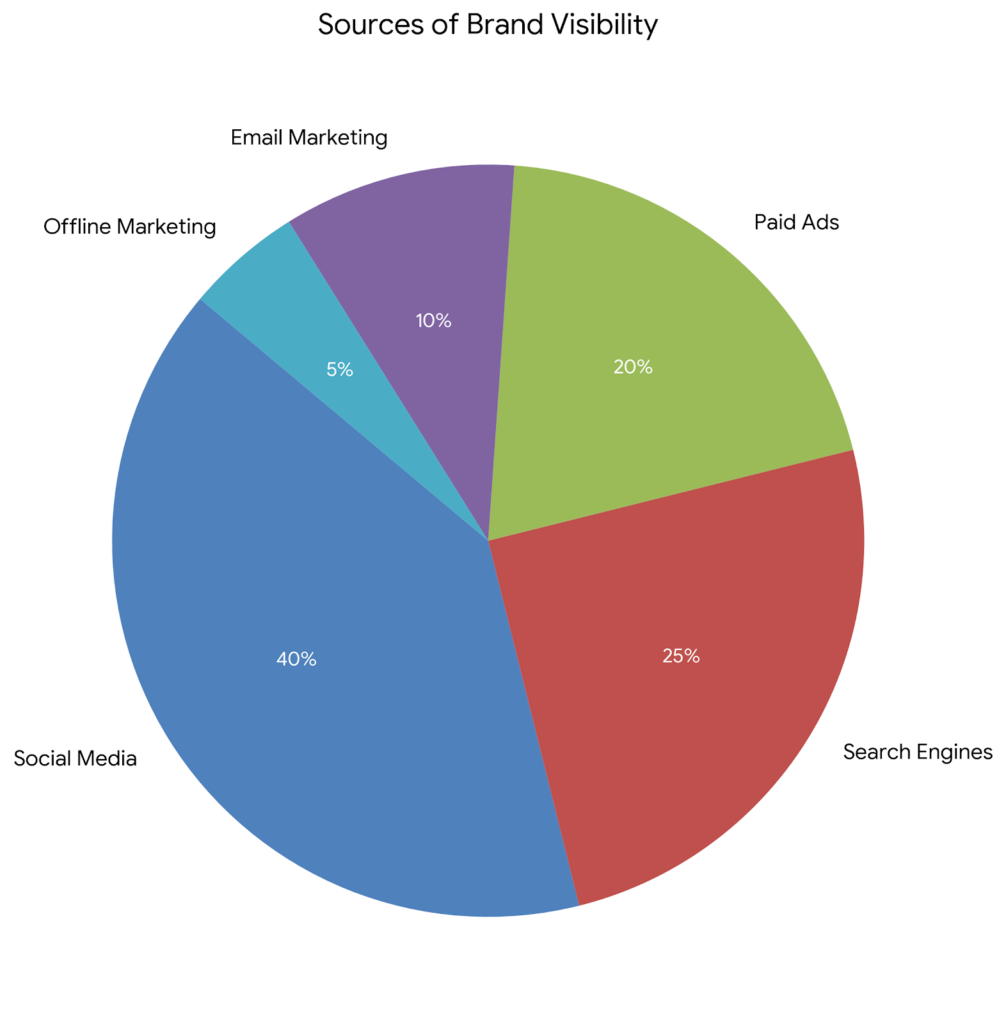
The chart above represents a common visibility distribution model for modern digital-first brands. Social media and search engines dominate visibility strategies because consumers spend most of their attention on digital platforms.
The Strength of Visibility
Visibility is powerful because it increases familiarity. Research in consumer psychology consistently shows that repeated exposure builds trust. People are more likely to engage with brands they recognize. This phenomenon is called the “mere exposure effect.” The more people see a brand, the more comfortable they become with it. This is why companies invest millions into repetitive advertising. Brands like:
[image]
focus heavily on visibility campaigns to stay constantly present in consumers’ minds. Yet visibility without strategic positioning creates a major problem. People may notice the brand but fail to understand why it matters.
Understanding Brand Positioning
What Is Brand Positioning?
Brand positioning refers to the specific place a brand occupies in the minds of consumers. It answers one critical question: “Why should people choose your brand instead of competitors?” Positioning is not about how often people see you. It is about what people think and feel when they do. A positioned brand creates a distinct identity.
It communicates:
- Unique value
- Emotional connection
- Market differentiation
- Brand personality
- Audience relevance
- Trust and credibility
Positioning defines perception. And perception drives purchasing decisions.
Positioning Creates Meaning
Strong positioning helps customers instantly associate a brand with something specific.
For example:
| Brand | Market Positioning |
| Apple | Innovation and premium simplicity |
| Nike | Motivation and athletic excellence |
| Volvo | Safety |
| Tesla | Futuristic sustainable technology |
| Rolex | Luxury and status |
These companies are not simply visible.
They own a clear psychological space.
That is the power of positioning.
Positioning Framework
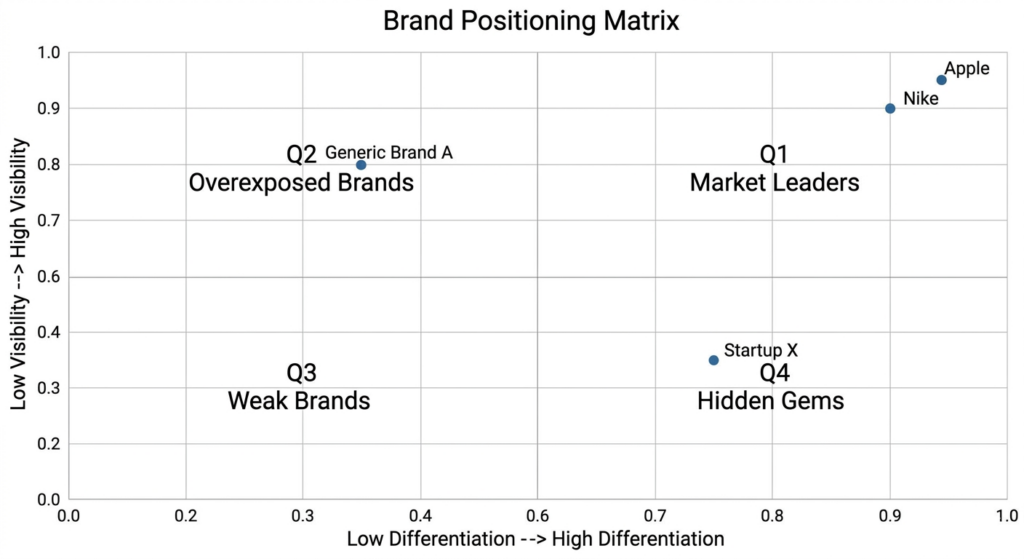
This matrix highlights how positioning and visibility work together. The strongest brands achieve both high visibility and strong differentiation.
The Core Difference Between Visibility and Positioning
Although they work together, visibility and positioning are fundamentally different.
Visibility Focuses on Attention
Visibility is about being seen. It increases awareness and exposure. The goal is to maximize audience reach. Visibility asks: “How many people know we exist?”
Positioning Focuses on Perception
Positioning is about meaning. It shapes how audiences interpret your brand. The goal is to build preference and emotional association. Positioning asks: “What do people associate with us?”
Comparison Table
| Visibility | Positioning |
| Creates awareness | Creates perception |
| Focuses on reach | Focuses on relevance |
| Driven by exposure | Driven by differentiation |
| Short-term marketing metric | Long-term brand strategy |
| Can increase quickly | Takes time to build |
| Measured through traffic and impressions | Measured through customer perception |
| Makes people notice you | Makes people remember you |
Why Visibility Alone Is Dangerous
Many businesses prioritize visibility because it produces fast numbers.
- More views.
- More clicks.
- More followers.
- More impressions.
These metrics feel exciting. However, visibility without positioning creates shallow brand awareness. People may consume your content but forget your business immediately afterward. This is one of the biggest reasons many brands struggle despite large audiences.
The Social Media Illusion
Modern marketing often rewards visibility over clarity.
- A brand can go viral without building authority.
- A creator can gain millions of views without establishing trust.
- A company can spend heavily on ads yet fail to create emotional differentiation.
This creates what marketers call “empty attention.” The audience notices the content. But the brand identity remains weak.
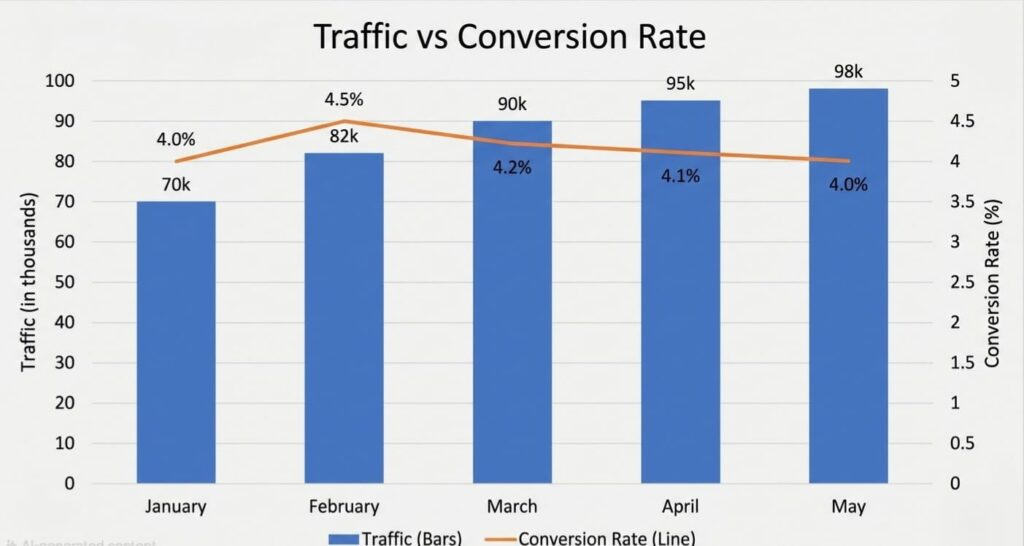
This graph demonstrates a common business problem. Traffic continues to grow. But conversions remain flat. Why? Because visibility increased while positioning stayed weak. People visited the brand but did not feel a strong reason to choose it.
Why Positioning Creates Long-Term Growth
Strong positioning changes how customers evaluate a brand. Instead of competing only on price or visibility, positioned brands compete on identity. This creates several long-term advantages.
1. Stronger Brand Recall: Positioned brands are easier to remember. Consumers instantly connect them with a specific promise. That mental shortcut increases decision-making speed.
2. Higher Customer Trust: Clear positioning communicates consistency. Customers trust brands that know exactly who they are. Confused brands create confused audiences.
3. Better Pricing Power: Positioned brands can charge premium prices. Customers are willing to pay more for brands that represent status, expertise, quality, or emotional value. This is why luxury brands succeed despite higher costs.
4. Improved Customer Loyalty: People become loyal to identities. Not advertisements. Strong positioning creates emotional belonging. That emotional relationship increases retention.
Brand Loyalty Flowchart
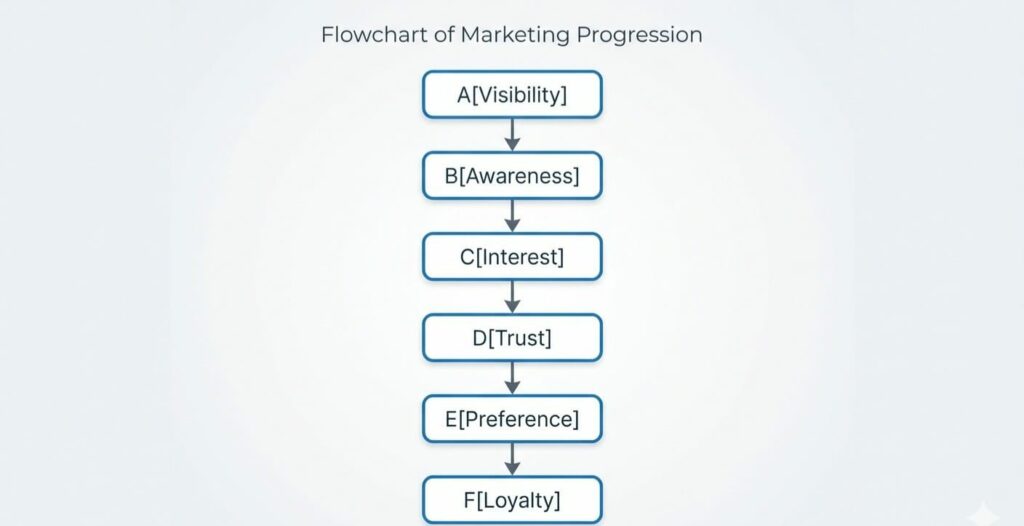
Visibility starts the process. Positioning completes it.
How Businesses Can Build Better Positioning
Positioning is intentional. It does not happen automatically. Brands must strategically define how they want to be perceived.
Step 1: Define Your Core Identity
Start by identifying:
- What your business truly stands for
- What values you represent
- What unique transformation you provide
- What emotional experience customers receive
Your positioning should be clear enough to explain in one sentence.
Step 2: Understand Your Audience Deeply
Strong positioning comes from audience understanding.
You must know:
- Customer frustrations
- Aspirations
- Buying behavior
- Emotional triggers
- Lifestyle preferences
Positioning becomes stronger when it aligns with audience identity.
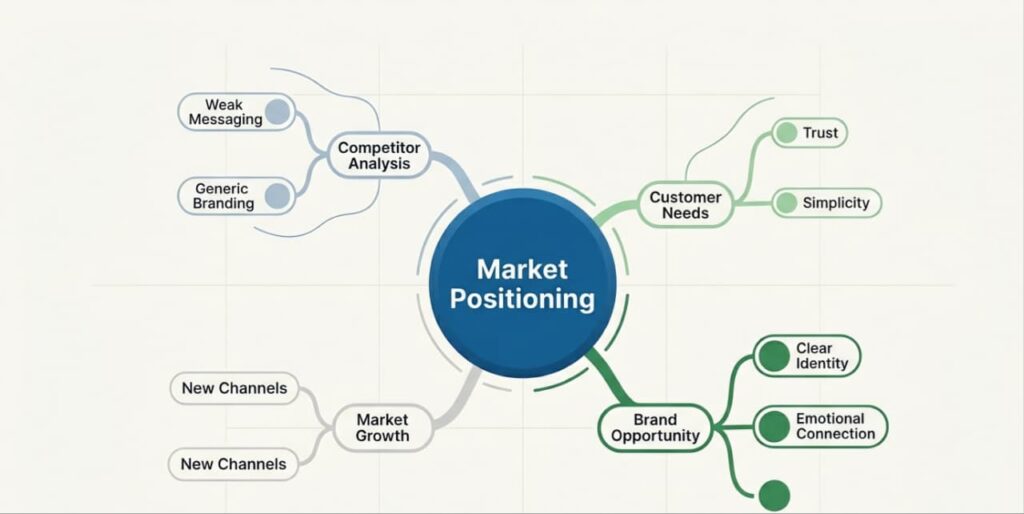
Step 3: Identify Market Gaps
Positioning succeeds when brands occupy unique spaces. Study competitors carefully. Find what they ignore. Look for opportunities where customer needs remain underserved.
Step 4: Create Consistent Messaging
Positioning only works when messaging stays consistent across all platforms.
Your:
- Website
- Social media
- Advertisements
- Visual identity
- Brand voice
- Content strategy
must reinforce the same perception repeatedly. Consistency builds recognition. Recognition builds trust.
The Relationship Between Visibility and Positioning
Visibility and positioning are not enemies. They are partners. The best brands combine both. Visibility attracts attention. Positioning gives that attention meaning. Without visibility, positioning stays hidden. Without positioning, visibility becomes forgettable. Businesses need both to achieve sustainable growth.
The Ideal Brand Strategy
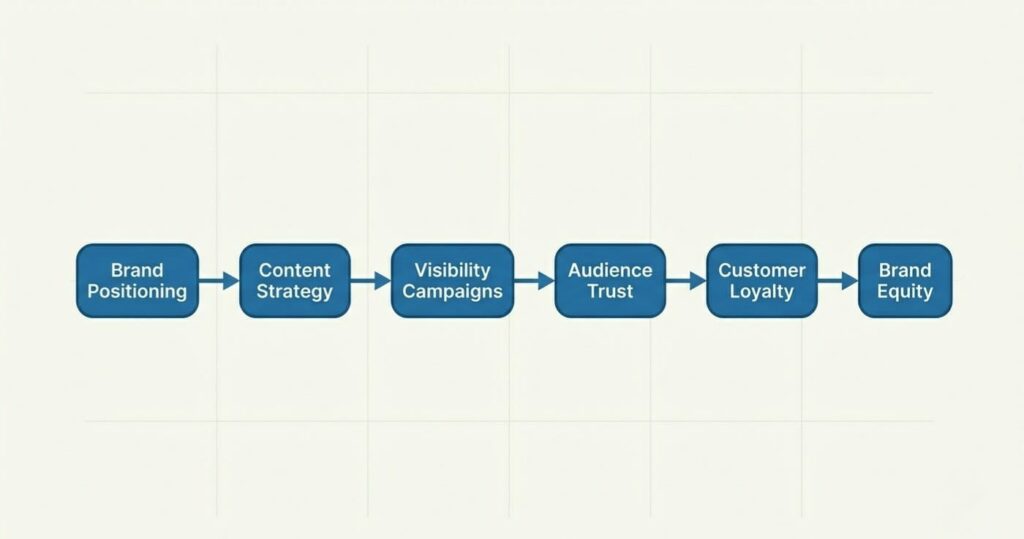
The most effective marketing strategy follows this sequence:
- Build clear positioning
- Create consistent brand identity
- Increase visibility strategically
- Reinforce positioning through every interaction
- Build emotional customer loyalty
This creates long-term brand equity.
Strategic Brand Growth Funnel
Brands that skip positioning often struggle with inconsistent marketing. Their campaigns generate temporary spikes but fail to create lasting influence.
Common Mistakes Businesses Make
Mistake 1: Chasing Virality: Virality creates visibility. Not necessarily positioning. Many businesses become obsessed with trends while ignoring brand clarity. This creates disconnected audiences.
Mistake 2: Copying Competitors: When brands imitate others, differentiation disappears. Positioning requires originality. Customers remember brands that feel distinct.
Mistake 3: Inconsistent Messaging: Changing messaging constantly weakens perception. Positioning requires repetition. The audience should consistently associate your brand with the same identity.
Mistake 4: Measuring Only Vanity Metrics: Likes and views do not always translate into business growth. Brands must also measure:
- Customer perception
- Brand recall
- Customer trust
- Retention rate
- Conversion quality
These metrics reflect positioning strength.
Future of Branding: Positioning Will Matter More Than Ever
The digital world is becoming noisier every year. Artificial intelligence, automation, and content saturation are increasing visibility competition dramatically. As attention becomes cheaper, perception becomes more valuable. This means positioning will become the real competitive advantage. Consumers will increasingly choose brands that feel meaningful, authentic, and emotionally aligned with their identity. The businesses that understand this shift will dominate future markets.
Wrapping It Up:
Visibility and brand positioning are connected but fundamentally different. Visibility gets your brand noticed. Positioning gives your brand identity. One creates attention. The other creates trust. One increases exposure. The other builds preference. Modern businesses need both. However, positioning must always come first. Without positioning, visibility becomes noise. Without visibility, positioning stays invisible. The strongest brands in the world succeed because they combine strategic exposure with powerful emotional differentiation. That is why consumers do not just recognize them. They remember them. And in modern branding, being remembered is far more valuable than simply being seen.